Blog · Guides
How to specify marble for your project
A five-part checklist for turning a marble enquiry into a clear specification: selection and photo reference, format and dimensions, thickness and finish, material requirements, and documentation.
Guides4 min read
By SAV Stonex, Ambaji
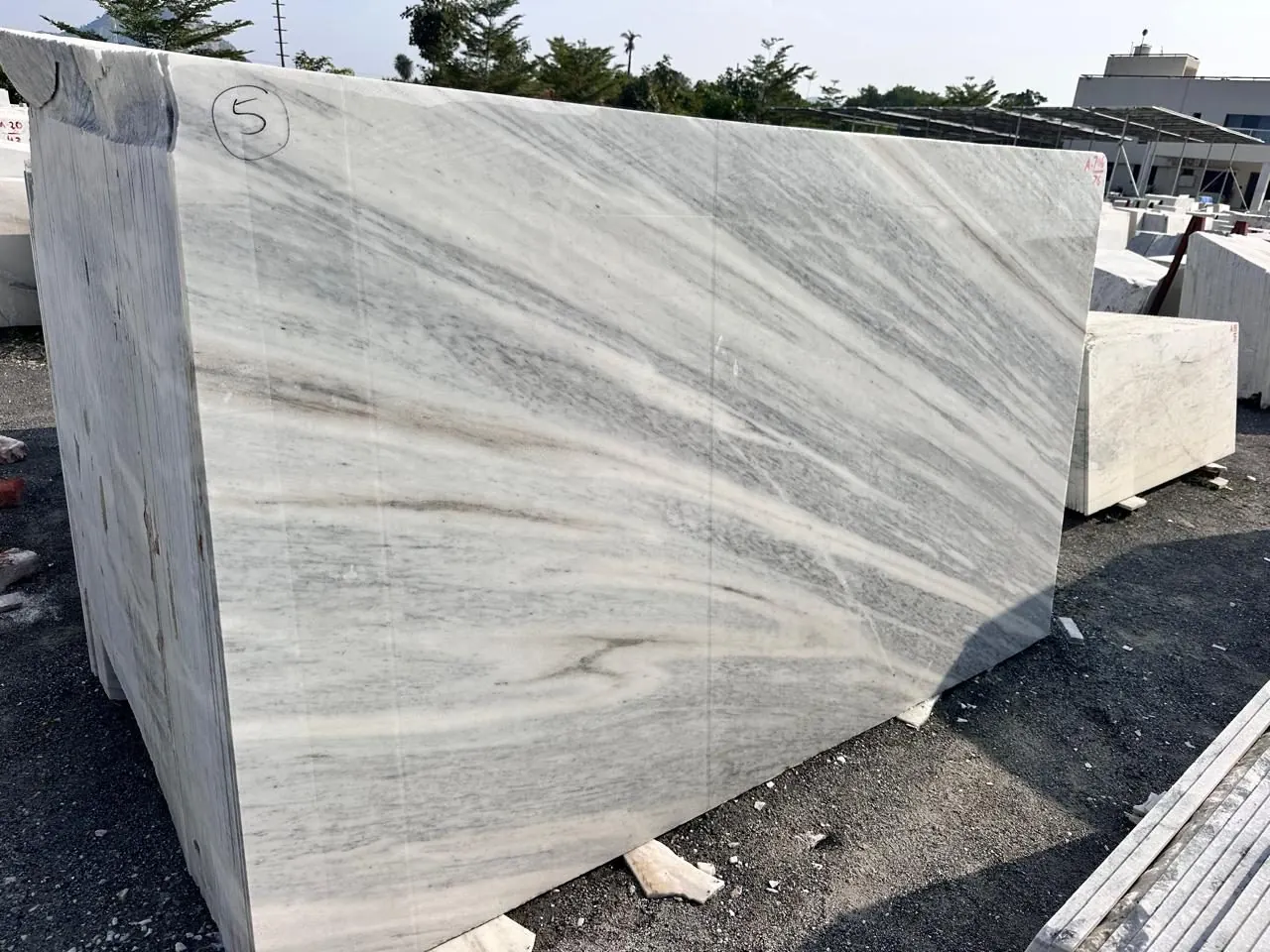
A marble enquiry moves fastest when it arrives as a specification rather than a single question. Natural stone is selected lot by lot, so the more precisely you describe what you need, the sooner it can be matched to material that is actually in the yard.
Our Marble Collection closes with a short checklist under the heading "Your project. Your specification." It has five parts. Here is what each one asks for, and why it matters.
1. Your stone selection
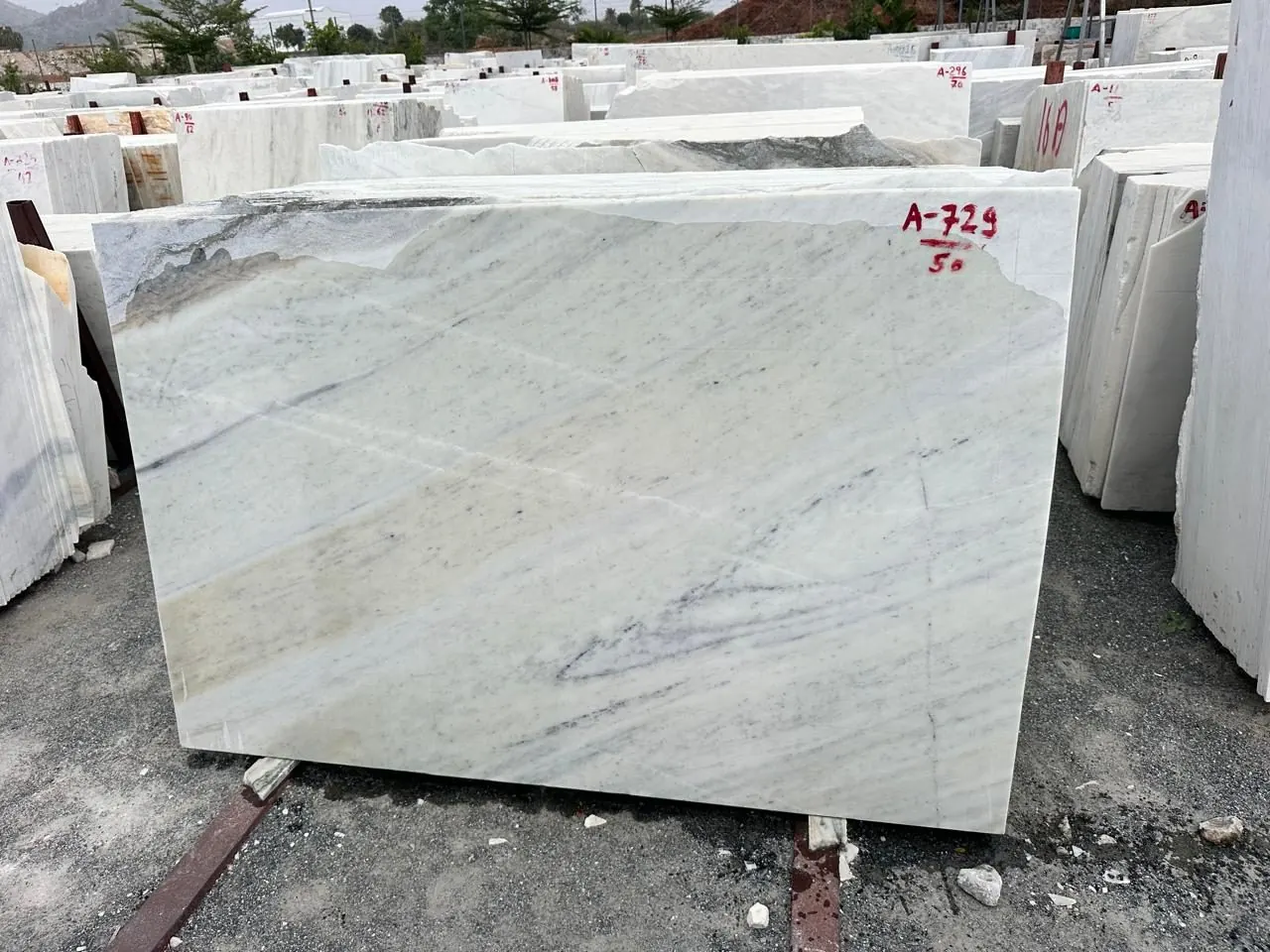
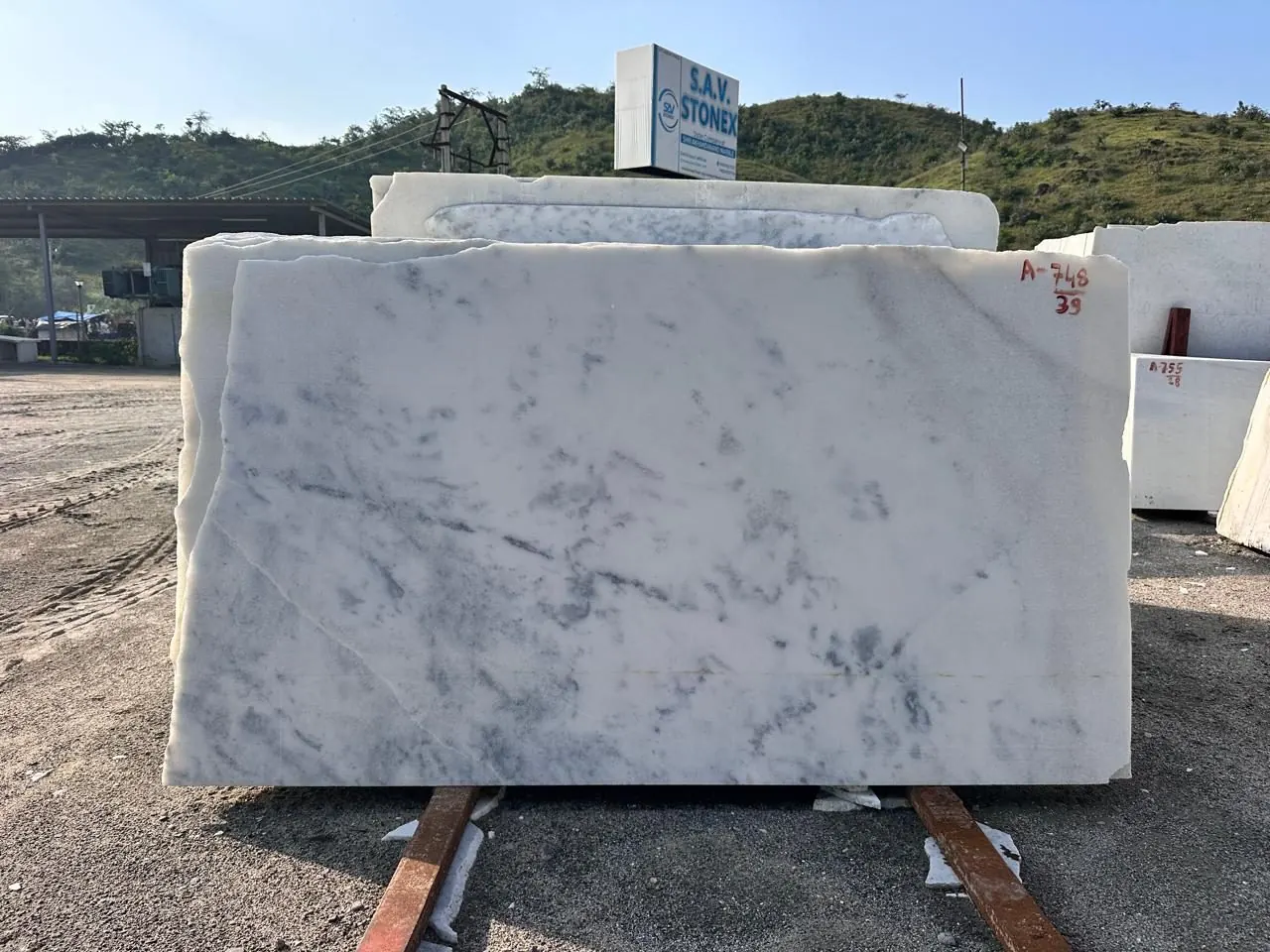
Start with the collection you prefer and, wherever you can, the photo reference. Every gallery photograph in our collection carries a code, such as AW-01 for a lot of Ambaji White or HP-03 for Harkishan Panther. Quoting the code tells us exactly which material you looked at.
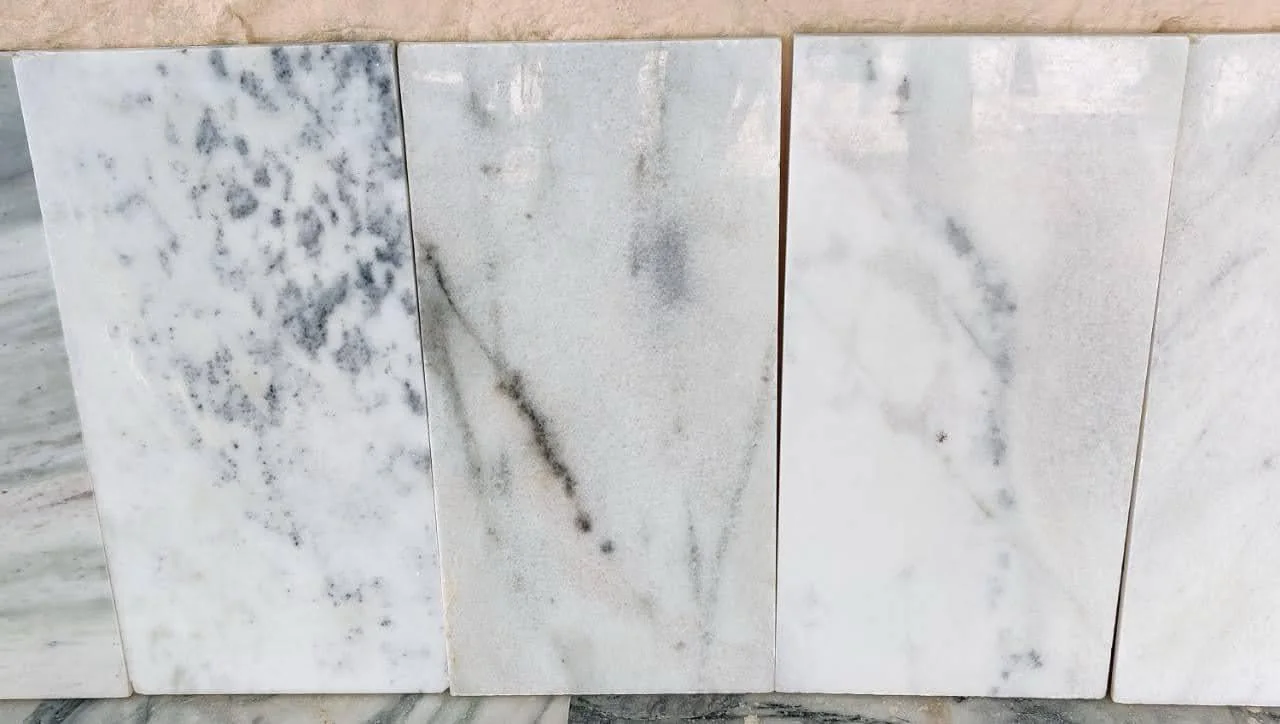
Then describe the shade and pattern you are after in your own words: a quieter face or a more veined one, a cooler or a warmer white, an even field or bolder movement. Colour and veining vary naturally from lot to lot, so the reference and the description work best together.
Quote the photo reference when enquiring.
2. Format and dimensions
Tell us whether you need slabs or cut-to-size pieces, the dimensions, and the total quantity in square metres. Slabs suit large, continuous surfaces and leave the final cutting to your site team. Cut-to-size pieces arrive ready to install, which suits repeated elements such as tiles, treads and panels.
If you have drawings, send them. Dimensions taken from drawings show where joints will fall and how the pieces relate to one another, which matters whenever the veining needs to read consistently across a floor or a wall.
3. Thickness and finish
State your preferred thickness, the surface finish and any edge details. We supply our marble polished or honed. A polished surface reflects light and tends to deepen colour and veining; a honed surface is matte and reads more quietly.
Edge details belong in the specification too, for countertops, stair treads and any exposed edge, because they affect how each piece is cut and finished. Whatever you choose, judge the stone in the finish you intend to use: lighting and finish both influence how natural marble appears.
4. Material requirements
This is where you set out how the stone should be prepared and what you will accept. The checklist names surface treatment, filling, backing and material acceptance. Filling refers to treating the natural pits and fissures in a surface; backing is a reinforcing layer applied to the reverse of a slab.
If your market or your project has its own acceptance criteria, share them at the start. The selection can then be made against them, rather than checked against them afterwards.
5. Project documentation
Describe the intended application: flooring, wall cladding, a kitchen island, a staircase, a bathroom. The same stone may be selected differently for each. Then list any technical reports or documentation your project requires, so we can confirm what is available for the selected material before the order is placed.
If you are specifying Ambaji White, ask about origin documentation. Ambaji White Marble is a registered geographical indication (GI Application 1114).
A brief you can send today
Put together, a complete brief fits in a single message:
- Collection and photo reference, with the shade and pattern you prefer
- Slabs or cut-to-size pieces, with dimensions
- Total quantity in square metres
- Thickness, finish (polished or honed) and edge details
- Surface treatment, filling, backing and acceptance requirements
- Intended application and any documentation required
- Delivery destination
Send it on WhatsApp or by email, and we will come back with current lot photographs and samples to review. The steps that follow are set out in From enquiry to dispatch.