Blog · Collection
Four whites, four characters: a guide to Ambaji White and its family
Ambaji White, its Green and Brown Shades, and White Cloudy share a white ground but differ in colour, movement and mood. How to tell them apart, and where each one is at its best.
Collection3 min read
By SAV Stonex, Ambaji
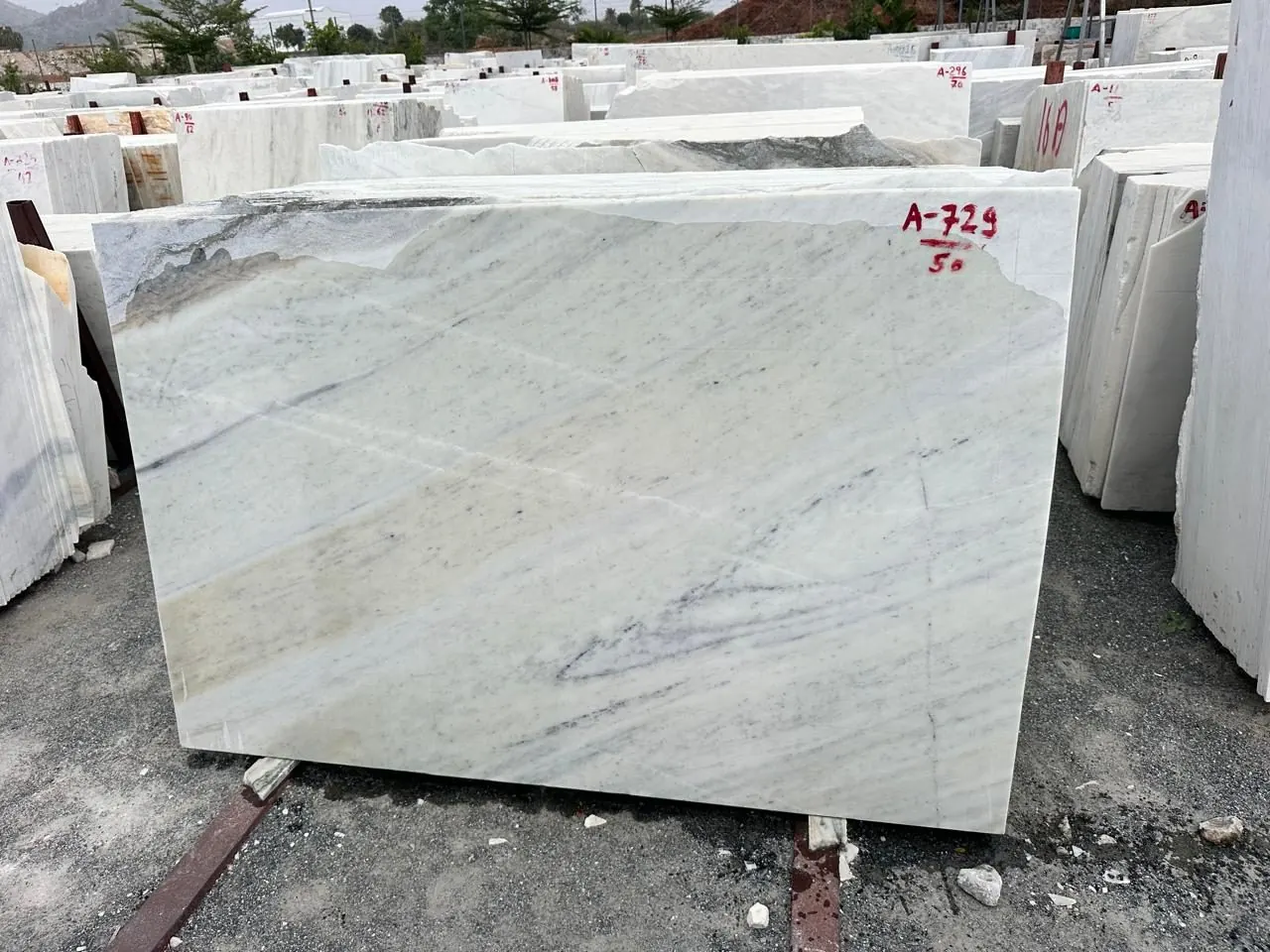
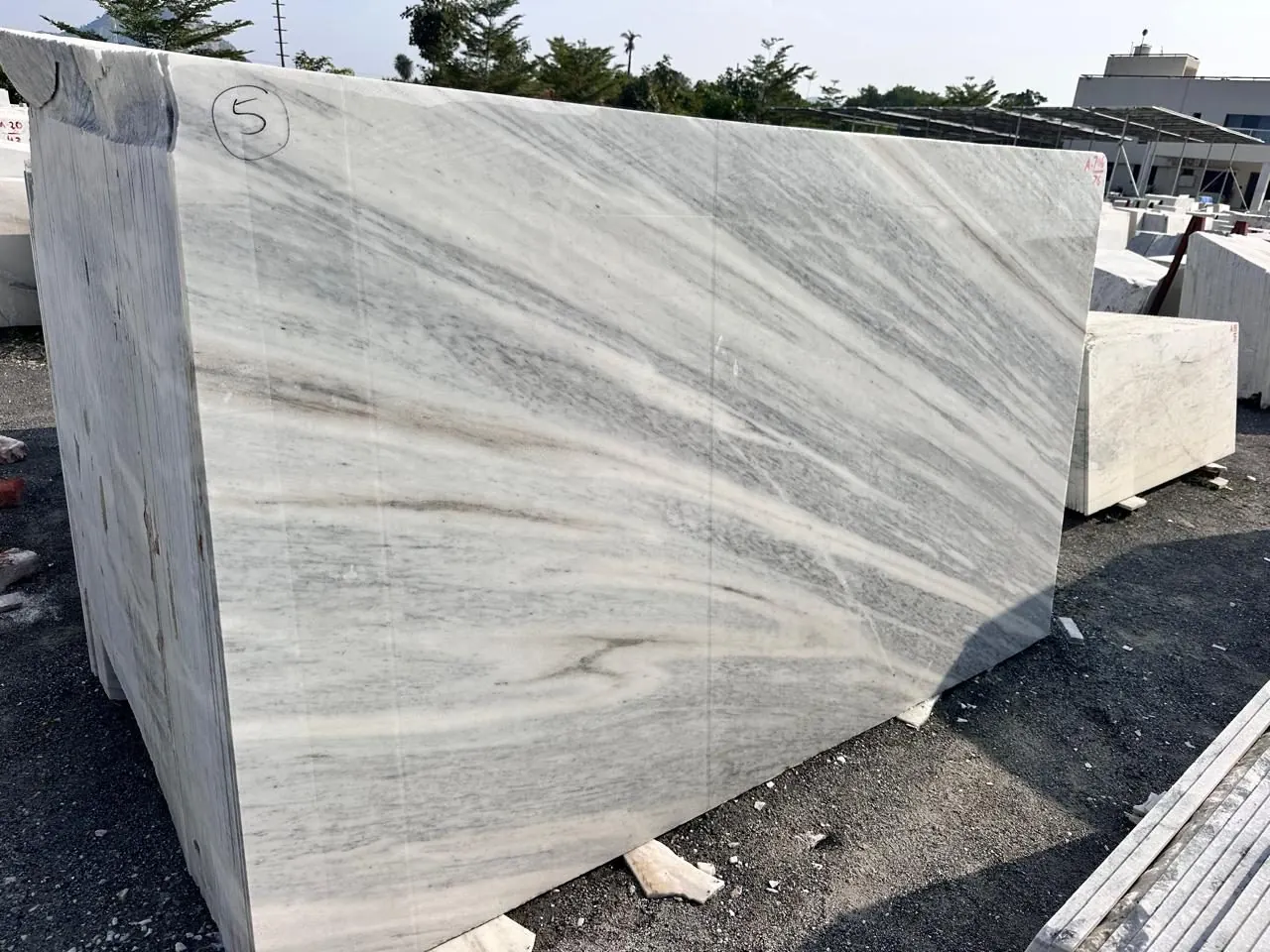
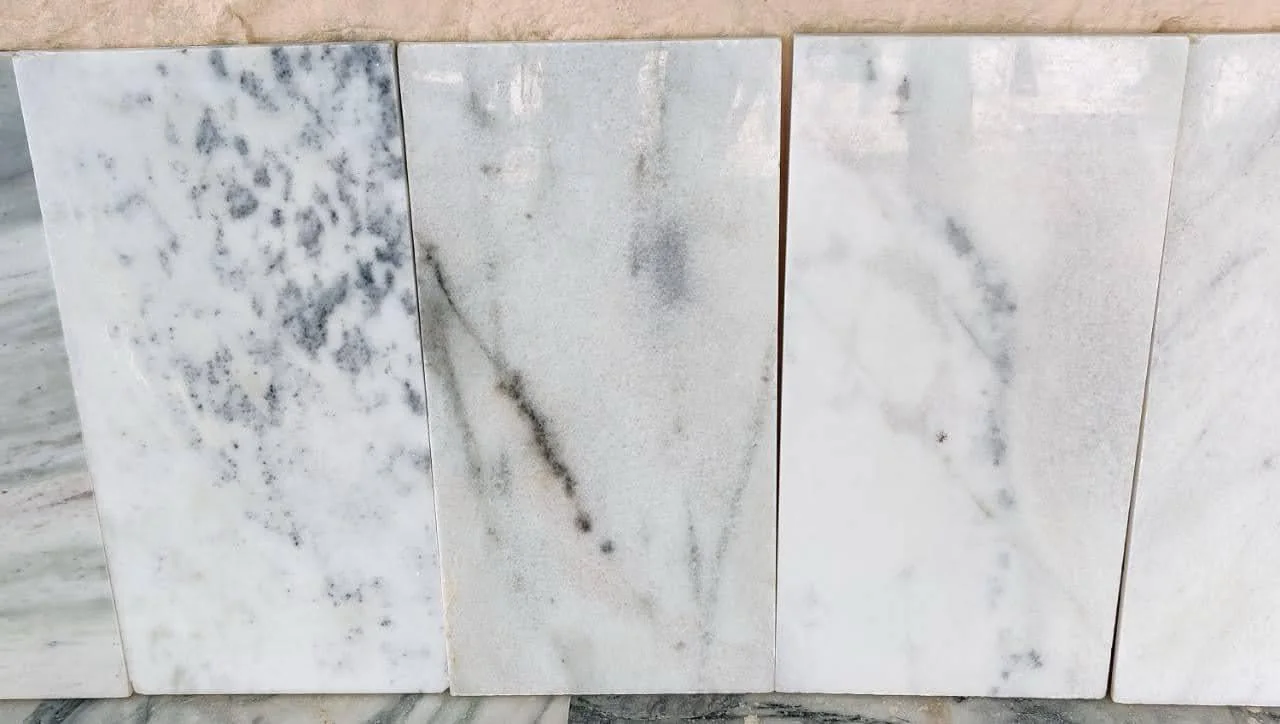
Four of the stones in the SAV Stonex collection share a white ground: Ambaji White, Ambaji White Green Shade, Ambaji White Brown Shade and White Cloudy. Side by side they are clearly related, yet each brings a different temperature and movement to a space. This guide sets out what distinguishes them, drawing on the descriptions in our Marble Collection.
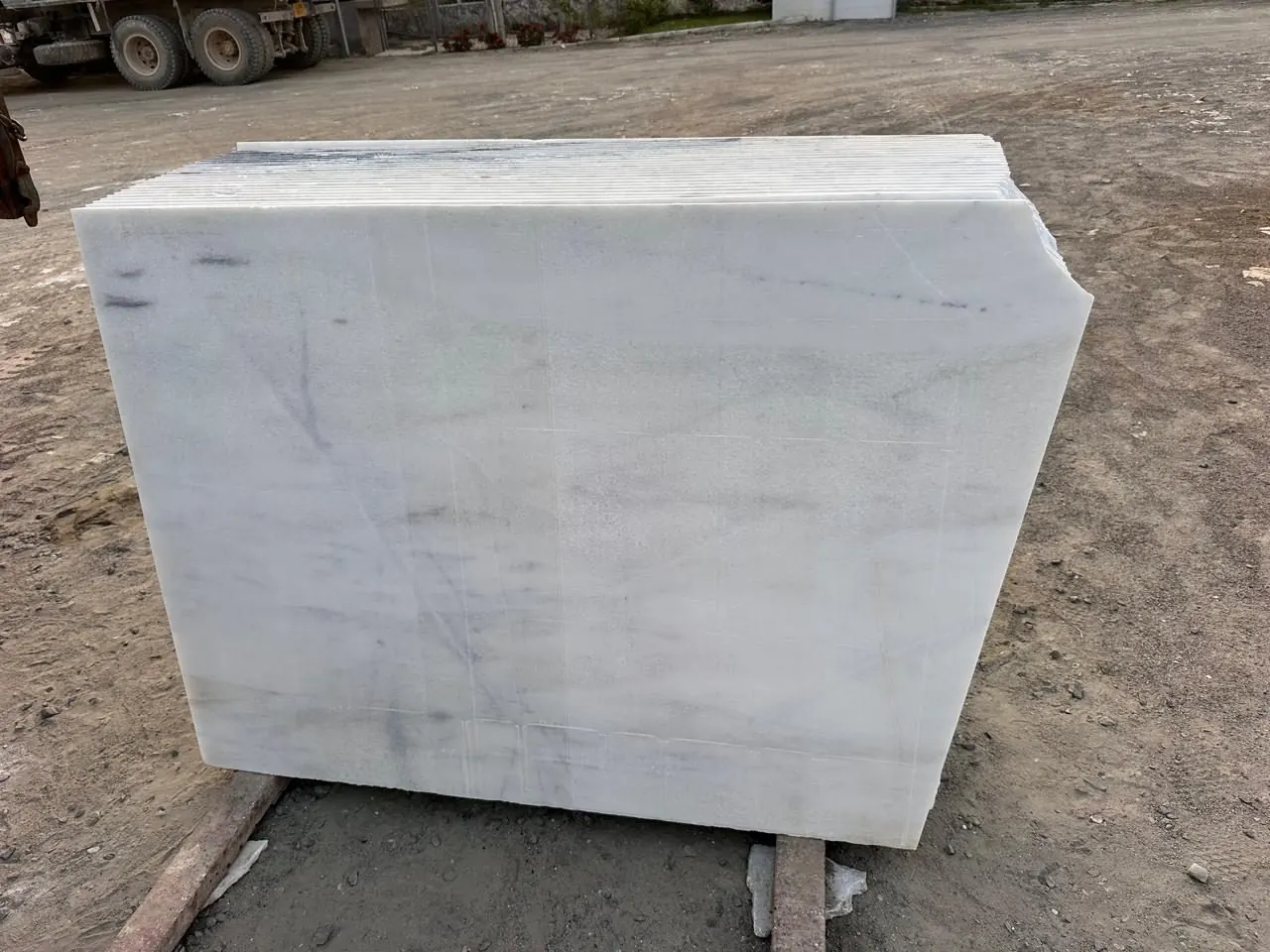
Ambaji White
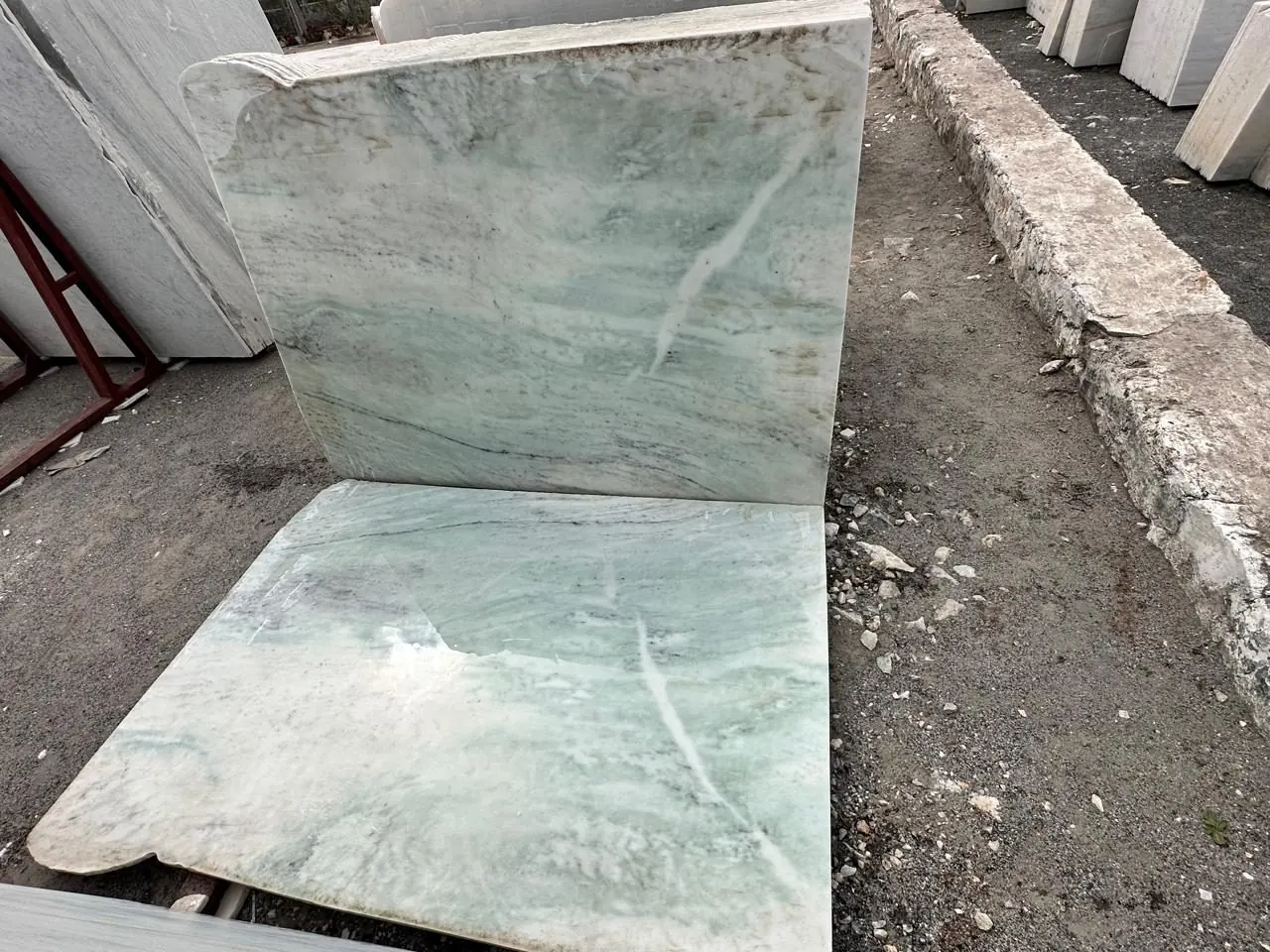
Green Shade, wet surface reference
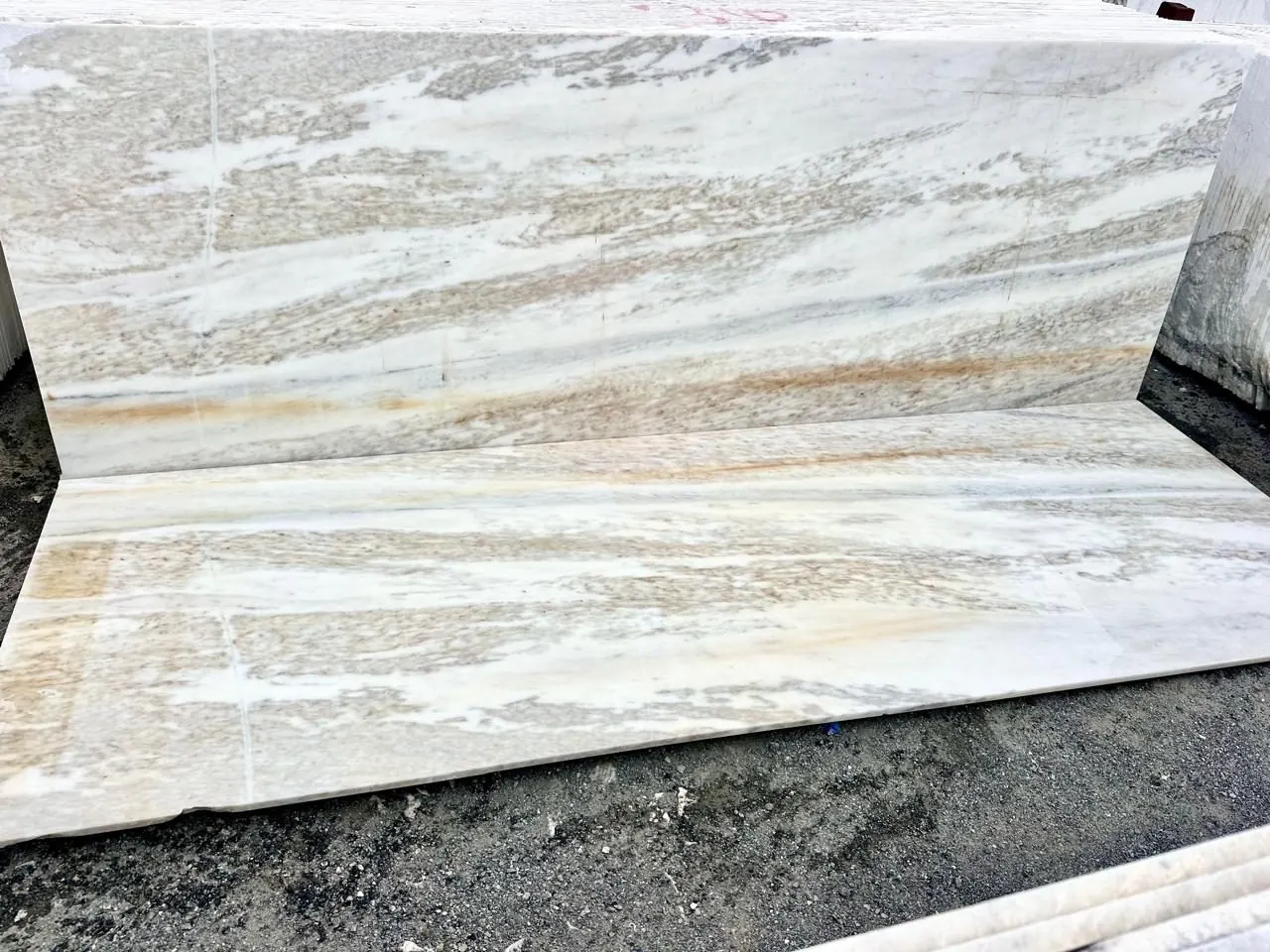
Brown Shade
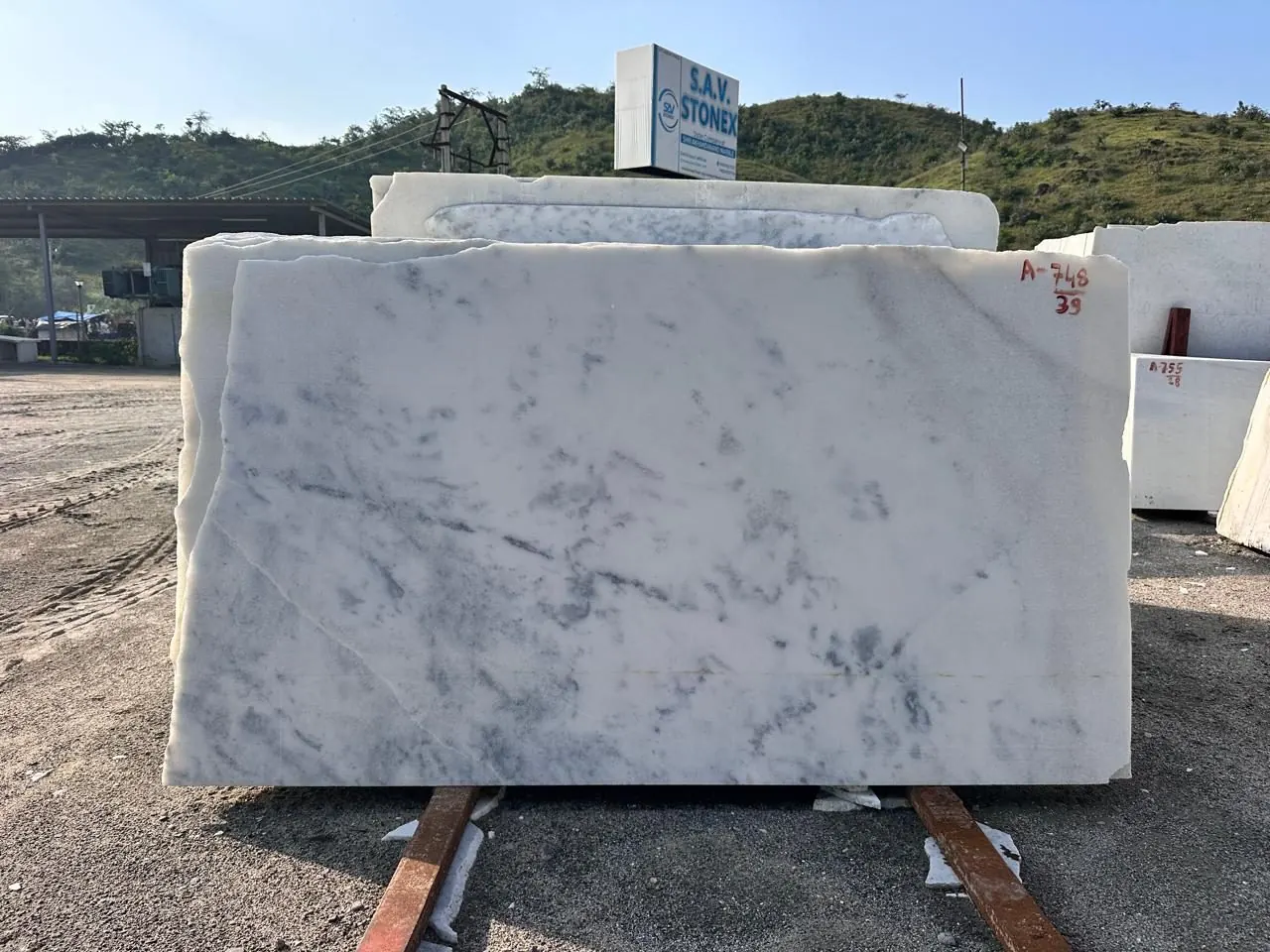
White Cloudy
Ambaji White: space to breathe
A luminous white foundation with restrained grey movement. The selection ranges from quieter faces to gently veined slabs, letting the stone bring light and depth to an interior.
- Colour: white and soft grey
- Movement: subtle to gently veined
- Pairs with: pale oak, lime plaster and brushed metal
Our interior concept for Ambaji White is a light-filled entrance, where large-format flooring gives the quieter selection room to unfold. Ambaji White Marble is a registered geographical indication; ask about origin documentation for the selected material.
Ambaji White Green Shade: a cooler expression of white
Pale green undertones move through a white ground, from delicate shading to more visible mineral clouding. Because the depth of green differs from lot to lot, select by the individual lot to establish the depth of colour you want.
- Colour: white, pale green and grey
- Movement: soft shading to clouded movement
- Pairs with: light oak, linen and warm neutral walls
In our interior concept, a generous island countertop brings Green Shade into everyday living, with warm oak and brass complementing its cool mineral tones.
Ambaji White Brown Shade: warmth, written in stone
White marble with flowing grey and warm brown movement. Some slabs read quietly; others reveal more pronounced earthy bands. Of the four, this is the stone that most rewards careful tonal selection.
- Colour: white, taupe, warm brown and grey
- Movement: directional bands and tonal variation
- Pairs with: walnut, bronze and warm plaster
Our interior concept carries Brown Shade up a staircase, through treads, risers and a landing, with simple bronze railings that let the stone define the journey.
White Cloudy: soft movement, lasting presence
Grey clouding drifts across a white background, with variation in density and distribution from slab to slab. Large surfaces reveal the pattern more clearly than a small sample, so review lot photographs as well as samples.
- Colour: white and smoky grey
- Movement: diffuse clouding and scattered marks
- Pairs with: natural oak, soft whites and nickel
In our interior concept for a quieter bathroom, White Cloudy brings depth to wall panels and a vanity, within a pale palette that keeps the stone the focal point.
Choosing between them
Start with temperature. Ambaji White and White Cloudy keep to whites and greys; Green Shade cools the palette and Brown Shade warms it. Then consider movement, from the restrained veining of Ambaji White, through the clouding of White Cloudy and Green Shade, to the directional bands of Brown Shade.
Finally, think about how much of the stone will be seen at once. Quieter selections suit large, continuous floors, where the stone sets the tone without taking over. Stronger movement rewards surfaces that are seen as a whole, such as a staircase, an island or a wall.
Select by the individual lot to establish the depth of colour you want.
Whichever way you lean, compare current lots and samples before you decide. Our guide to reading lot photographs and samples explains how.